

Every June, the rainbows come out. Storefronts get colorful. Corporations update their logos. Parades fill city streets with music and glitter and joy. And somewhere in all of that, it can be easy to forget where Pride actually came from.
Pride began as a riot.
In June 1969, patrons of the Stonewall Inn, a bar in New York City that served queer and trans people who had nowhere else to go, fought back against a police raid. They were led, in large part, by Black and brown trans women, including Marsha P. Johnson and Sylvia Rivera. They were not asking politely. They were demanding the right to exist.
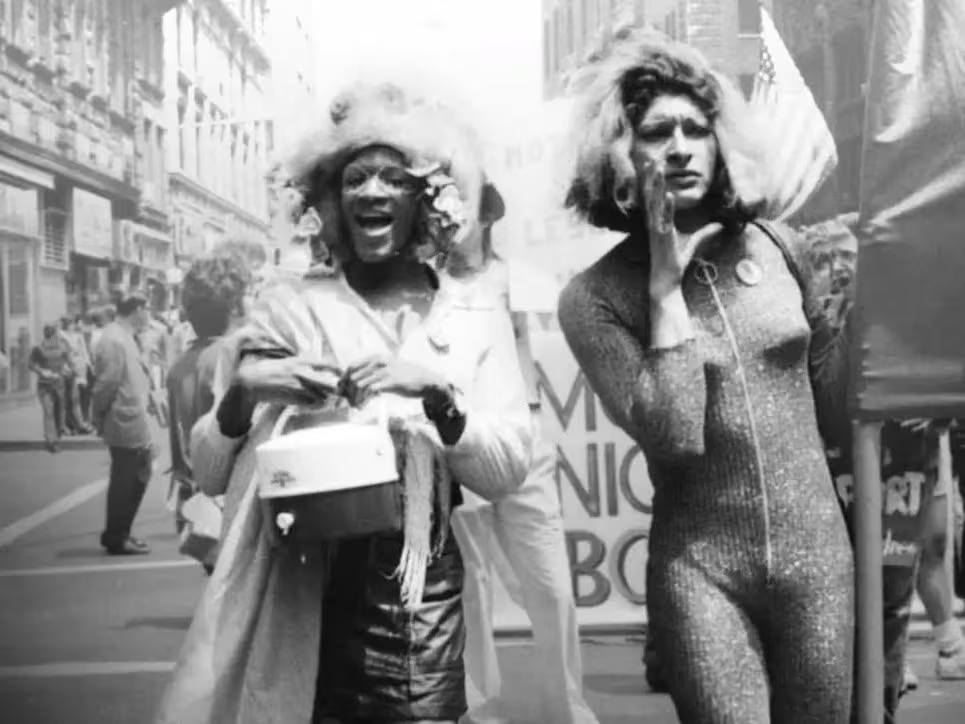
The first Pride marches, held the following year, were not celebrations. They were protests. They were a declaration that LGBTQ+ people would not be shamed into silence, would not be erased, would not disappear just because the world found them inconvenient.
That history matters. Not to dampen the joy of Pride, but because the joy and the protest are the same thing.
Celebration Is Resistance
For people who have been told that their identity is a disorder, a sin, a phase, or something to be hidden, simply existing openly is a radical act. Dancing in the street, holding a partner’s hand in public, being exactly who you are for everyone to see: these things carry weight. They always have.
The mental health toll of living in a world that questions your worth is real. Research consistently shows that LGBTQ+ people, particularly trans and nonbinary individuals and queer youth, face disproportionately high rates of anxiety, depression, and trauma. Much of that burden does not come from being queer. It comes from the stigma, the rejection, and the systems that have failed them.
Pride, in its fullest form, pushes back against all of that. It says: you are not broken. You do not need to be fixed. You belong here.
Why This Matters Right Now
The political landscape in 2026 is not neutral. Anti-trans legislation, book bans, and attempts to restrict gender-affirming care are not hypothetical threats. They are real, and they affect real people, including people in our community here in New Hampshire.
When Pride feels more urgent this year, that is not an accident. It is the point.
We See You
Finding affirming mental health care should not be another battle. For too many LGBTQ+ people, it is. The exhaustion of having to educate your provider, defend your identity, or brace for judgment in a space that is supposed to feel safe is its own kind of harm.
You deserve care that starts from the assumption that you are whole. That meets you where you are. That does not ask you to shrink.
Pride is a protest. It is also a reminder that community, visibility, and care are forms of survival. We are glad you are here.